 eKhajana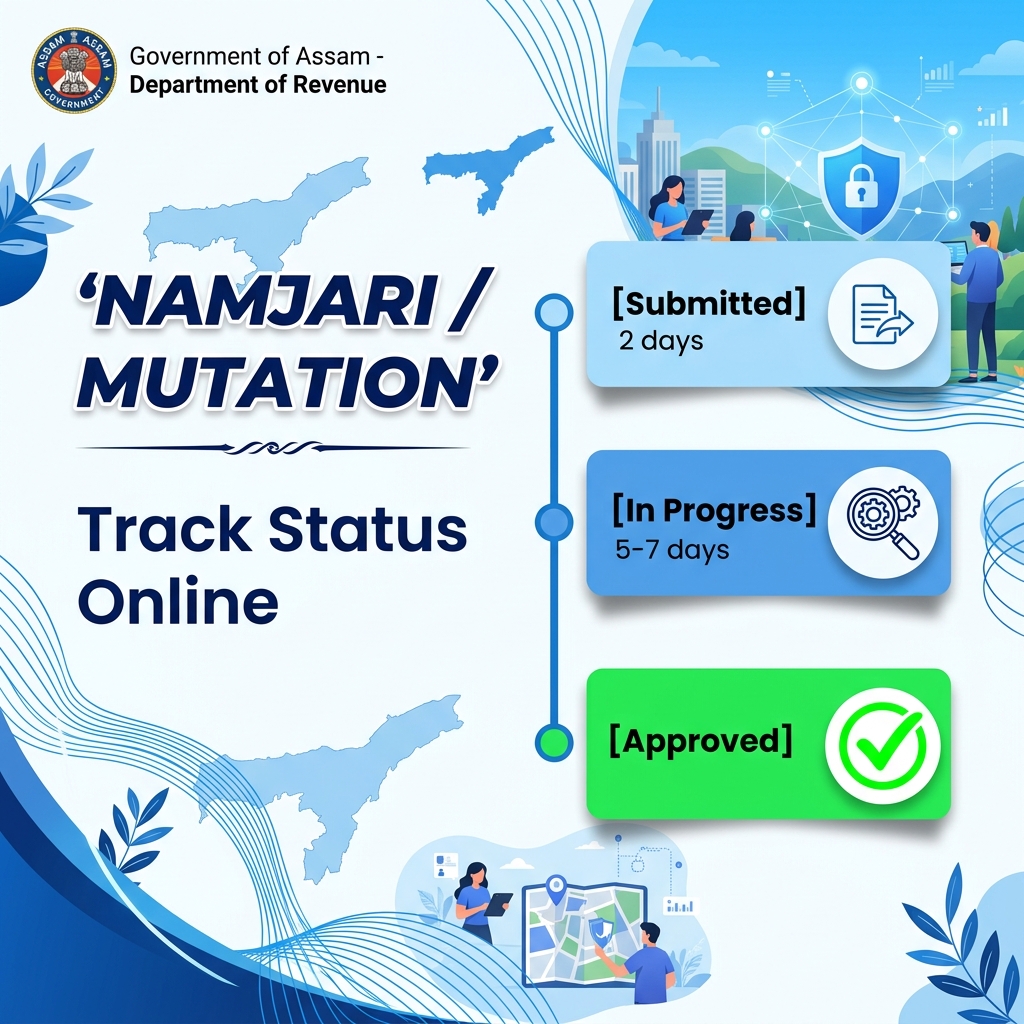
When you buy a land plot in Assam, the most crucial next step is Mutation (locally known as Namjari). Mutation is the process of updating the government land records to replace the old owner's name with your name. Without Namjari, you are not the official owner in government records, even if you have a registered sale deed.
If you have already applied for land mutation online, here I will show you how to track your application status easily from your mobile or laptop using your RTPS reference number.
Why is Namjari (Mutation) So Important?
Many land buyers in Assam make the mistake of thinking that registration of the sale deed at the Sub-Registrar office completes the ownership transfer. But that is only half the process. The sale deed registers the transaction with the stamps department, but it does NOT update the land revenue records with the Revenue Department.
Until Namjari is done:
- The old seller's name remains in the government's Jamabandi (land records).
- The old owner can potentially create fraudulent transactions on the same land.
- You cannot pay land revenue (Khajana) in your name, which means you technically lack proof of tax-paying ownership.
- Banks and courts will consider the previous owner's name as the legal owner for land revenue purposes.
- You cannot apply for further land services (partition, correction, etc.) in your name.
This is why Namjari should be done immediately after registering your sale deed. Mission Basundhara has made this process online and streamlined.
What is the RTPS Reference Number?
When you submit your Namjari application online on the Sewa Setu or Basundhara portal, you receive a printed acknowledgment receipt. On that receipt, you will find a unique number called the RTPS Application Reference Number (e.g. RTPS/NAMJARI/2025/XXXX). This is the only number you need to check your file status.
Keep this number safe in your phone or notepad. Without it, you cannot track your application status online and will have to visit the circle office in person.
Steps to Track Mutation (Namjari) Status Online
Follow these simple steps:
- First, open your web browser and visit the official portal: https://basundhara.assam.gov.in.
- On the homepage menu, find and click on "Track Application".
- You will be redirected to the tracking page. In the input box, enter your complete RTPS Reference Number exactly as shown on your receipt.
- Solve the captcha verification code if displayed.
- Click on the Search / Track button.
- Your current application status will appear on your screen, showing which officer is currently reviewing your file.
Understanding Different Status Messages
- Pending with Lot Mandal (LM): This means the field surveyor has to verify your land records physically and check if the plot boundaries match the sale deed.
- Pending with Circle Officer (CO): The Lot Mandal has sent the report. It is now waiting for final approval and signing by the Circle Officer.
- Approved / Disposed: Congratulations! Your mutation is approved. Your name has been successfully updated in the village land records, and you can now download your updated Jamabandi copy.
- Rejected: Your application was declined due to missing documents or boundary mismatches. You can check the reason on the screen and re-apply.
- Under Hearing: A third party has filed an objection to your mutation. The Circle Officer will hold a formal hearing where all parties must present their case. Consult a revenue lawyer immediately.
How Long Does Namjari Take in Assam?
Under the RTPS Act framework and Mission Basundhara guidelines, the Namjari process should be completed within 30 working days. In practice, the timeline is:
- Week 1-2: Application received and forwarded to Lot Mandal for field verification.
- Week 2-4: Lot Mandal conducts physical survey and submits verification report to Circle Officer.
- Week 4-6: Circle Officer reviews and issues the Namjari order (approval).
- Within 7 days of approval: Updated Jamabandi is available on the Dharitree portal.
If there are no objections, 4 to 6 weeks is a typical realistic timeframe. However, in high-traffic circles with large backlogs, it can sometimes take 2 to 3 months.
What Documents Are Needed for Namjari?
For a standard mutation after land purchase, you will need:
- Registered Sale Deed (Bikri Kabala) — certified copy from the Sub-Registrar office.
- Previous owner's Jamabandi / Patta copy.
- Latest Land Revenue Receipt (Khajana receipt) in the previous owner's name.
- Aadhar Card of the new buyer (applicant).
- Passport-size photograph of the new owner.
For Namjari through inheritance (after the landowner's death), additional documents are required: Death Certificate of the deceased, Legal Heir Certificate, and NOC from other legal heirs if applicable.
Common Problems & Troubleshooting
- Status shows "Under Hearing" due to objection: Attend the hearing at the Circle Office on the scheduled date. Bring all original land documents and ideally a revenue lawyer to represent your case.
- Lot Mandal's verification delayed beyond 30 days: Visit the Circle Office and submit a written complaint to the CO requesting urgent action. You can also call the CM Helpline (15100).
- Namjari rejected due to name mismatch: The name in your Aadhar/sale deed must exactly match what you entered in the application. Correct spelling and resubmit.
- After approval, Jamabandi not updating on Dharitree: Allow 7 to 15 working days after approval for the Dharitree database to update. If it still doesn't update, contact the circle office for manual update.
Frequently Asked Questions
Q: Can I apply for Namjari before registering the sale deed?
No. The registered sale deed from the Sub-Registrar office is a mandatory document for Namjari. The revenue department needs the certified registered deed as proof of the ownership transfer before they can update the land records.
Q: What happens if Namjari is rejected?
If your Namjari is rejected, the rejection order will mention the specific reason. Common reasons include objections from co-owners, boundary disputes, missing documents, or the land being under a legal stay order. Address the specific issue mentioned in the rejection order and re-apply with the corrected documents.
Q: Can I track Namjari status without the RTPS number?
It is difficult to track without the RTPS number online. However, you can visit your revenue circle office and request the staff to look up your application by providing your Patta number, Dag number, and the approximate date of application. They can find the application and update you on the status.
Q: Is Namjari required for inherited land if no sale deed was made?
Yes, Namjari is required for inherited land too. Instead of a sale deed, you need to submit a Legal Heir Certificate (obtained from the SDO/SDC office), the deceased owner's death certificate, and consent of all legal heirs. The process is similar but requires these specific inheritance documents.
Q: After Namjari approval, do I automatically get a new Patta?
Yes. After the Circle Officer approves the mutation, a new Patta (land lease certificate) is issued in your name. Under Mission Basundhara's digital initiative, you can download this digitally signed Patta directly from the Sewa Setu portal without visiting the circle office.
Conclusion
Tracking your Namjari application status online is now easy and transparent thanks to the Mission Basundhara portal. After buying land in Assam, apply for Namjari immediately and check the status regularly. If the application is stuck at any stage for more than 30 days, follow up proactively at the circle office. Once your Namjari is approved and your name reflects in the Jamabandi, you are officially the legal owner of the land in government records — protecting your rights completely.
Common Reasons for Mutation (Namjari) Rejection
Knowing why applications get rejected can help you prepare your file properly:
- Incorrect Land Details: Mismatches in the Dag number or Patta number between the registered sale deed and the online Jamabandi.
- Missing Signatures: In case of inheritance mutation, failure to provide signatures or consent of all legal heirs.
- No Objection Issues: Boundary disputes or active court cases on the land plot.
Frequently Asked Questions
Q: Why is land mutation (Namjari) necessary?
A: A sale deed only proves you paid for the land, but mutation updates the government land records. Without mutation, you cannot pay land tax or sell the land in the future.
Q: Can I apply for mutation online in Assam?
A: Yes, you can apply online through the Mission Basundhara portal (https://basundhara.assam.gov.in) using your mobile or computer.
Q: What is the fee for online land mutation?
A: The application fee is Rs. 50. There might be additional processing or dynamic verification charges depending on the case type.
Q: What should I do if my mutation is rejected?
A: Read the rejection remarks in GSC/Basundhara tracking. Fix the specified issue (like uploading a clearer document) and submit a new application.
Q: Can I download the updated Jamabandi immediately after mutation?
A: Yes, once the status shows 'Approved' or 'Disposed', the digital records update automatically, and you can download your new Jamabandi from Dharitree.